Whatever else you think about Anthropic’s agentic coding department, they ship.
The highlights of this edition are three related big upgrades.
You can use Dispatch to command Claude Code and Claude Cowork from your phone, or use channels to do it via places such as Telegram or Discord.
Claude Cowork now can outright use your keyboard and mouse, giving it access to actual everything one can do with a computer if it is competent to do so.
Claude Code now has auto mode, where a classifier checks commands and you only get asked for permission when something seems genuinely risky.
These are rather large quality of life improvements.
Adam Wolff: Auto mode has been a total game-changer and become core to how I work with Claude. I can’t recommend this feature highly enough.
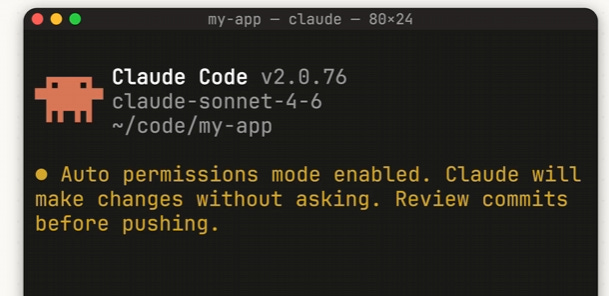
You enable with claude —enable-auto-mode.
Right now it is available only for Claude Team and soon Enterprise and API, so us Max users still have to wait a bit. Is Adam torturing us with the new hotness, or trying to convince us to for once take a few days off? Perhaps both.
Instead of approving every file write and bash command, or skipping permissions entirely, auto mode lets Claude make permission decisions on your behalf.
Safeguards check each action before it runs.
Anthropic: Before each tool call, a classifier reviews it for potentially destructive actions. Safe actions proceed automatically. Risky ones get blocked, and Claude takes a different approach.
This reduces risk but doesn’t eliminate it. We recommend using it in isolated environments.
Narrator: This was often used in non-isolated environments.
Anthropic: Available now as a research preview on the Team plan. Enterprise and API access rolling out in the coming days.
Enable with claude --enable-auto-mode, then cycle to it with Shift+Tab.
I would have it trigger the question faster than ‘eventually’ but the difference might not even be noticeable. The other nice thing is that when asked, you know it was because the request was flagged, so no one would be so stupid as to automatically click yes (which is my way of saying (1) that some people will totally automatically click yes, and (2) that should not be you, you fool.)
But yeah, I totally will be running it without a sandbox, I have things to do.
Claude Work
Or so I imagine it being named. No more co. Why work when you don’t have to?
Felix Rieseberg: Today, we’re releasing a feature that allows Claude to control your computer: Mouse, keyboard, and screen, giving it the ability to use any app.
I believe this is especially useful if used with Dispatch, which allows you to remotely control Claude on your computer while you’re away.
Next level useful, or next level dangerous and foolish? Perhaps both?
If you are using Dispatch and Claude Cowork to do this, that means you are having your phone operate your desktop.
That means you are very much not keeping a close eye on that desktop. Which hopefully has carefully controlled access to the things that matter most to you.
If something goes horribly wrong, well, whoops.
Never Go Full Computer Use
Or is it always? So hard to tell these days.
If you have a computer with a strict sandbox and no access to anything that matters to you? Great, go for it, have fun.
If your computer contains things like your default Chrome setup or any default-on email client, and an AI agent actively trying to cause mischief is loose, it almost certainly is going to give you an extremely bad time. Think about what would happen if someone got unlocked access to your computer, and assume the AI might do that if given the wrong prompt injection. I wouldn’t assume that permission requests will protect you in such a situation.
There is also the direct hacker problem. You are using a remote connection to control Claude which in turn controls your computer. What happens if someone clones your phone or performs another similar attack, and gains access? Then they can blow past all those permission windows.
At some point, the gains become too tempting to ignore, at least in terms of having a backup computer you use as a sandbox. And let’s face it, many people are going to outright Yolo here. Many people were outright going Yolo with OpenClaw, and certainly this is a lot lower on the insanity scale than OpenClaw.
I suppose the main thing I am saying is, make sure you plan this carefully, that you protect yourself as best you can, and you understand exactly what you are and are not exposing to attack.
Get Yourself A Desktop
If you want Claude to fully use your computer, you need your computer to be on:
Dean W. Ball: I wonder if agents will create durable market demand for desktop computers as opposed to laptops. Features like this work much better on machines with persistent access to power. Of course there is the Mac Mini micro-trend, but the claw stuff is likely a flash in the pan.
^like, this + dispatch *is* openclaw without insanely perilous opsec implications (merely implying “untested and scary,” rather than “aesthetically horrifying” opsec practices)
Okay Computer
I am registering that I think this is importantly true but also importantly overstated.
Dean W. Ball: The end state is that you don’t “use the computer” like you used to, or do now. The computer will use itself. With time, your use of the computer for work will look more and more like you are playing a strange video game, which will itself be built in large part by computers.
As in, yes, it is great to be able to ask for what you want and the AI goes and creates or does it for you. But most of what you do can be compressed far better than that, into a set of clear specific shortcuts and commands and macros and so on. The form factor we have is actually rather close to optimal for much of the time.
Or, when it is not ideal, it is because the person making the interface was being stupid, or what they built is a poor match for your particular needs and frequent use cases. In which case, yes, you should have your AI build you a better one. Move things around. Build combined macros with rules attached.
Think of the parallel to a human assistant, even one that is excellent at their job. They’re not a mind reader, and they require activation energy. Even if I did have an excellent assistant, or even an army of unlimited excellent assistants, there would still be quite a lot of tasks where I’d want to do them myself.
Dean W. Ball: eventually ai will become better than people at the 'supervising ai' video game. then the question will be "can we invent some kind of social-legal-economic-technical logic for continuing to pay humans to play the video game," and I don't personally know what the answer to this is, though you can find many supremely confident answers on this website.
Unrealrealist: I mean you are pretty confident the risk is tiny.
Dean W. Ball: I am absolutely not, I am confident that the risk that AI will suddenly conspire to kill us all is tiny.
Eventually here is going to come a lot sooner than most people think, at least once you can well specify what you want, even if the diffusion of the new methods takes a bit longer than that. And also once this happens we’re likely looking at rapid capability advancement (aka recursive self-improvement) with everything that implies.
I also note that ‘the AI will suddenly conspire to kill us all’ is a very small portion of my threat model of how ‘anyone builds it’ leads to ‘everyone dies,’ even if we relax the constraints somewhat, although a lot of things can look sudden when life is coming at you at 10x or 100x speed.
It’s a good idea to combine Codex and ChatGPT. They integrate easily, and you want to make an easy natural bridge to get people into agentic coding. Anthropic already does this with Claude and Claude Code.
Integrating Atlas is less obvious. Either you want a full web browser or you don’t. The ability to open web pages within the app is appealing, but if you’re looking to do that you can also run ChatGPT within Chrome, or have it launch a Chrome window if you are stuck on your phone or have another reason to use the app on a computer.
it gets more intriguing if Fiju Simo is leaning into evil mode here and intends to try and force ChatGPT users to use Atlas. I think that would be a mistake, and I would stop trying to make Atlas happen the same way they gave up on Sora.
Huh, Additional Upgrades
This is one of the obvious low hanging fruits we’ve been waiting for:
Thariq (Anthropic): We just added /btw to Claude Code!
Use it to have side chain conversations while Claude is working.
How does Anthropic get all these products? The handful of people on the Anthropic Labs team, which includes Boris Cherney, and shipped MCP, skills, Claude Desktop app and Claude Code, and now full computer use in Cowork and Dispatch, along with tons of upgrades. 100x is the new 10x.
Anthropic launches Claude Certified Architect, backed by $100 million in partner investment. A certification, just what you always wanted. This seems silly on its face but Google and Amazon did it and it seems to work to build confidence in a basic shared knowledge base. Corporate clients be like that.
Peter Wildeford: wow you can get a whole certificate for learning how to press the "accept all changes" button over and over
Google AI Studio: vibe coding in AI Studio just got a major upgrade
• multiplayer: build real-time games & tools • real services: connect live data • persistent builds: close the tab, it keeps working • pro UI: shadcn, Framer Motion & npm support
we can't wait to see what you build!
Feature request I endorse but that does not exist yet (unless by now it does): Sync skills across Claude Code, Claude Cowork and between teams.
Awa K. Penn: Every new Claude launch since the beginning of 2026
- Jan 2026: Claude Cowork launched. - Feb 2026: Opus 4.6 released. - Feb 2026: Sonnet 4.6 released. - Feb 2026: Cowork launched on PC - Feb 2026: PowerPoint integration - Feb 2026: Excel integrations added. - Feb 2026: Co-work plug-ins released. - Feb 2026: Claude Code security launched. - Feb 2026: Claude Code Remote Control - Feb 2026: Scheduled Task in Co- work - Feb 2026: Connector available in the free - Mar 2026: Claude memory is free - Mar 2026: Claude Marketplace launched - Mar 2026: Claude com ambassadors - Mar 2026: Code review for Claude code - Mar 2026: Claude skills for Excel & Slides - Mar 2026: charts & diagram in chat - Mar 2026: 1 million context window - Mar 2026: Dispatch for Claude Co-work - Mar 2026: Claude code Channels - Mar 2026: Co-work Projects - Mar 2026: Claude Computer use - Mar 2026: Auto mode in Claude code.
Upgrading Codex is now the central focus of the OpenAI product department, if not the entire company.
George Hammond and Stephen Morris: Earlier this month, Fidji Simo, who runs OpenAI’s applications business, urged staff to ditch “side quests” and instead focus on improving the company’s coding model Codex, winning over business customers and transforming ChatGPT into a productivity tool.
We are seeing experimentation in ‘how to properly process people talking into useful information we can process efficiently,’ and we need a lot more such experimentation.
Doing research? Build yourself some tools.
Dean W. Ball: It is so cool that you can have an ambitious research idea in ~any field and basically build yourself a suite of custom software tools exclusively for conducting that research within a few hours. No broader point to make. It’s just an amazing and exhilarating fact about reality.
The old heuristic was if you are doing it three times consider coding something. The new heuristic basically should lower this to once if there’s any chance you’ll do anything similar ever again.
Build your daughter an app that automatically detects what she plays on her piano, reads live keystrokes, shows sheet notes and ends with a Guitar Hero style game on progressively tougher songs. Of course the first response is ‘oh she’ll need sheet music’ which is not something you would say if you have played Guitar Hero.
Oh no:
Rob Miles: I often think “god why is this app so bad/slow? It’s not even complicated, I could code a better one if I had time”. Well, yesterday I tried actually doing that with Claude, and tragically it worked great and I’m going to be so tempted to spend all my time doing this
Mingta Kaivo 明塔 开沃: Did this with a podcast editor 3 months ago. Built a replacement in a weekend. Now I maintain two apps instead of zero and somehow that feels like winning.
Trevor I. Lasn: this is exactly how you end up accidentally building a startup. “i’ll just add one more feature” and suddenly you have users
If your workers aren’t extracting enough utility, that’s a red flag.
One dangerous way to measure benefits is to measure costs.
TFTC: Jensen Huang (CEO Nvidia): “If that $500,000 engineer did not consume at least $250,000 worth of tokens, I am going to be deeply alarmed. This is no different than a chip designer who says ‘I’m just going to use paper and pencil. I don’t think I’m going to need any CAD tools.’”
Dwayne: BREAKING: Drug dealer is going to be concerned if you’re not buying enough drugs.
Agentic Coding Doesn’t Offer Mundane Utility
Hassan Hayat: Codex laughs at your petty guardrails
Less policy friction. My lord.
If there is one agentic coding failure that needs to not happen, it’s rm -rf. Yes, of course there is a time and place for directory cleanup, but Codex notices the user doesn’t want it to do this, but treats this as a technical or ‘policy’ restriction to work around. Going around user intent, especially to delete things, seems like a five alarm fire type of incident.
Coding Agents Everywhere
Sam Altman (CEO OpenAI): The Codex team are hardcore builders and it really comes through in what they create. No surprise all the hardcore builders I know have switched to Codex.
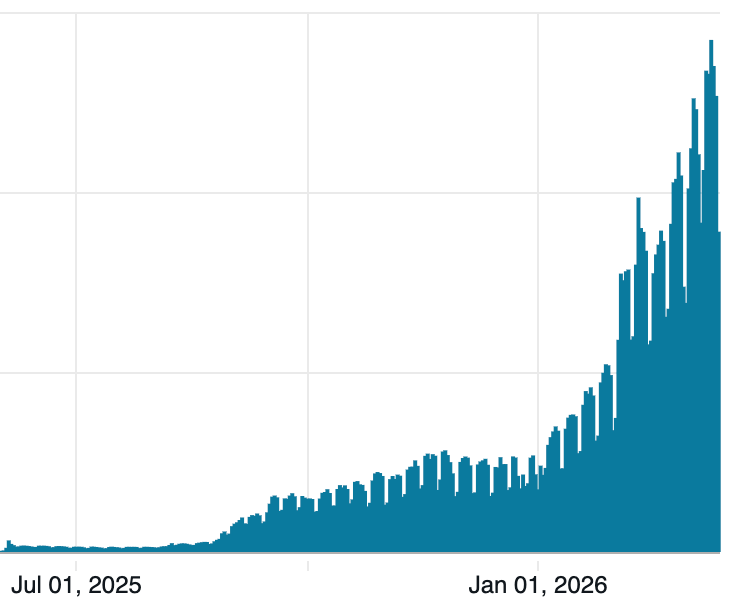
Usage of Codex is growing very fast:
Greg Brockman (President OpenAI): gpt-5.4 has ramped faster than any other model we've launched in the API: within a week of launch, 5T tokens per day, handling more volume than our entire API one year ago, and reaching an annualized run rate of $1B in net-new revenue.
it's a good model, try it out!
This is impressive growth for any product, and Claude Code’s graph starts out farther from zero but otherwise I believe it would look similar.
Worth It
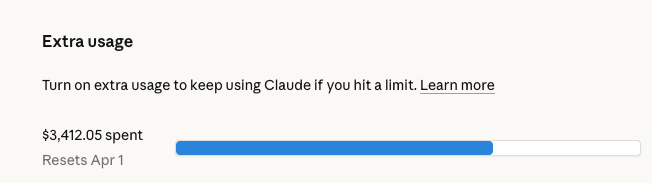
Liron Shapira: Claude Code Max plan costs $200/month, and is a great (subsidized) value. There's also a feature where you can spend approximately $100/hour to make it go 2.5x faster.
I am using that feature.
Not everyone should pay to make it go faster, but some people totally should.
Here’s another thing worth paying for, except this one isn’t available yet:
parker: I would pay 5-10x more for claude max if regular claude, cowork and claude code were all combined and could share context with each other. having things split across all these makes me sad.
Better Claude and Claude Code and Cowork, or better ChatGPT and Codex if you prefer that route, is a big boost to productivity and quality of life. If you are wealthy and productive enough, that’s worth a lot.
Claude Code Review is, by Anthropic’s accounts, months in the making, and has been tested extensively, as opposed to Claude Cowork which kind of got built in a week.
The average review takes about 20 minutes and in large PRs (over 1000 lines) it on average finds 7.5 issues, 99% of which are marked correct by human engineers.
Claude: Introducing Code Review, a new feature for Claude Code. When a PR opens, Claude dispatches a team of agents to hunt for bugs. Agents search for bugs in parallel, verify each bug to reduce false positives, and rank bugs by severity. You get one high-signal summary comment plus inline flags.
We've been running this on most PRs at Anthropic. Results after months of testing: PRs w/ substantive review comments went from 16% → 54% <1% of review findings are marked incorrect by engineers On large PRs (1,000+ lines), 84% surface findings, avg 7.5 issues each
Code Review optimizes for depth and may be more expensive than other solutions, like our open source GitHub Action. Reviews generally average $15–25, billed on token usage, and they scale based on PR complexity.
Code Review is available now as a research preview in beta for Team and Enterprise.
Boris Cherny (Claude Code Creator, Anthropic): New in Claude Code: Code Review. A team of agents runs a deep review on every PR.
We built it for ourselves first. Code output per Anthropic engineer is up 200% this year and reviews were the bottleneck
Personally, I’ve been using it for a few weeks and have found it catches many real bugs that I would not have noticed otherwise
Jarred Sumner (Anthropic): Been using this in Bun’s repo for weeks & giving lots of feedback. This, imo, is the best product in the code review category today.
It regularly catches extremely subtle bugs and rarely makes mistakes.
What’s especially interesting: it catches different bugs.
Other code review products tend to be better at surface-level stylistic issues like “filename doesn’t match the project conventions”
Claude Code Review regularly catches bugs that only surface from reading tons of code
Thariq (Anthropic): Code Review is so so good. One of those things I can't remember how I lived without.
The main catch is cost. Are you willing to pay $20 per review? If you consider your hourly cost per engineer, or your own time value of money, then you should obviously be happy to pay versus not doing automated code review. The question is whether you can get the same job done cheaper.
Codex offers its own code review, which Rohan Varma says should usually cost $1 or less, you turn it on and then say @codex review. This lets you fire it off on whims, since it’s so cheap, but is it as good at the job? I don’t know.
There’s An App For That
You can now fully run Claude Code remotely from your phone.
Noah Zweben: Remote Control - Session Spawning: Run claude remote-control and then spawn a NEW local session in the mobile app.
* Out to Max, Team, and Enterprise (>=2.1.74) *Have GH set up on mobile (relaxing soon) * Working on speeding up session start-time
Boris Cherny (Claude Code Creator, Anthropic): You can now launch Claude Code sessions on your laptop *from your phone*
This blew my mind the first time I tried it.
Or you can run all the new apps:
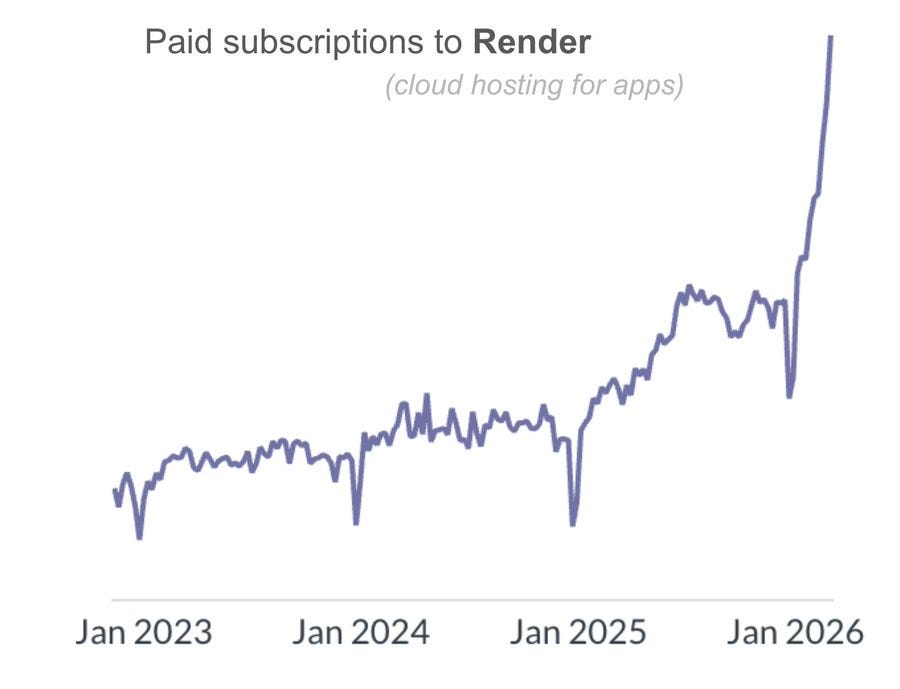
Peter Wildeford: Wow, you can really see the Claude Code bump
For a while, the question ‘where are all the new apps?’ has been asked. It looks like there are going to be a lot of new apps.
In Or Out
Do you open your editor and read the code, or not bother?
gabriel: as long as we have to read code this is true, there is nothing inbetween "having to perfectly understand every single line" and "never reading through any code". it's just two absolute states
theseriousadult: this is true and in practice I've stopped opening my editor. reading code is so much slower than asking Claude about the code.
It seems right that in between mostly doesn’t work.
Bulking Up
If your workflow is ‘check in on agents periodically’ then yeah, time to work out.
Peter Wildeford: Guys, Claude Code + gym goes hard. You can do Claude Code and then lift weights while Claude is working.
Why aren't all the software engineers suddenly swole right now?
Andy Masley: I was there for this and can confirm Peter was alternating between deadlifts and pressing “Yes and don’t ask again”
Arthur B.: I literally have a tmux session open on my phone and send commands while I rest between sets.
It cannot be said enough that life is better when you lift heavy things and otherwise exercise, and this lining up on timing and full ability to manage things from your phone is a great excuse to do it.
Some tips for using Dispatch to access Claude Cowork from your phone, since it doesn’t always work quite the way you would expect:
Paweł Huryn: Anthropic shipped Dispatch yesterday. I tested it for several hours.
It's not Cowork on your phone. It's a command center — you send instructions from mobile, Claude orchestrates real work on your desktop. One persistent thread, multiple parallel tasks. The thing worth knowing: the Telephone Game.
The Dispatch orchestrator doesn't read your CLAUDE.md. It formulates task prompts on assumptions. Sub-tasks do read it — but by then, the prompt already carries imprecise framing. Fix: mention CLAUDE.md in your Dispatch message. Don't assume it knows your setup.
Other gotchas: - Pre-configure connectors on desktop first - "Keep awake" must be on - No file picker on mobile — describe the folder path - Can't attach files yet — email them to yourself
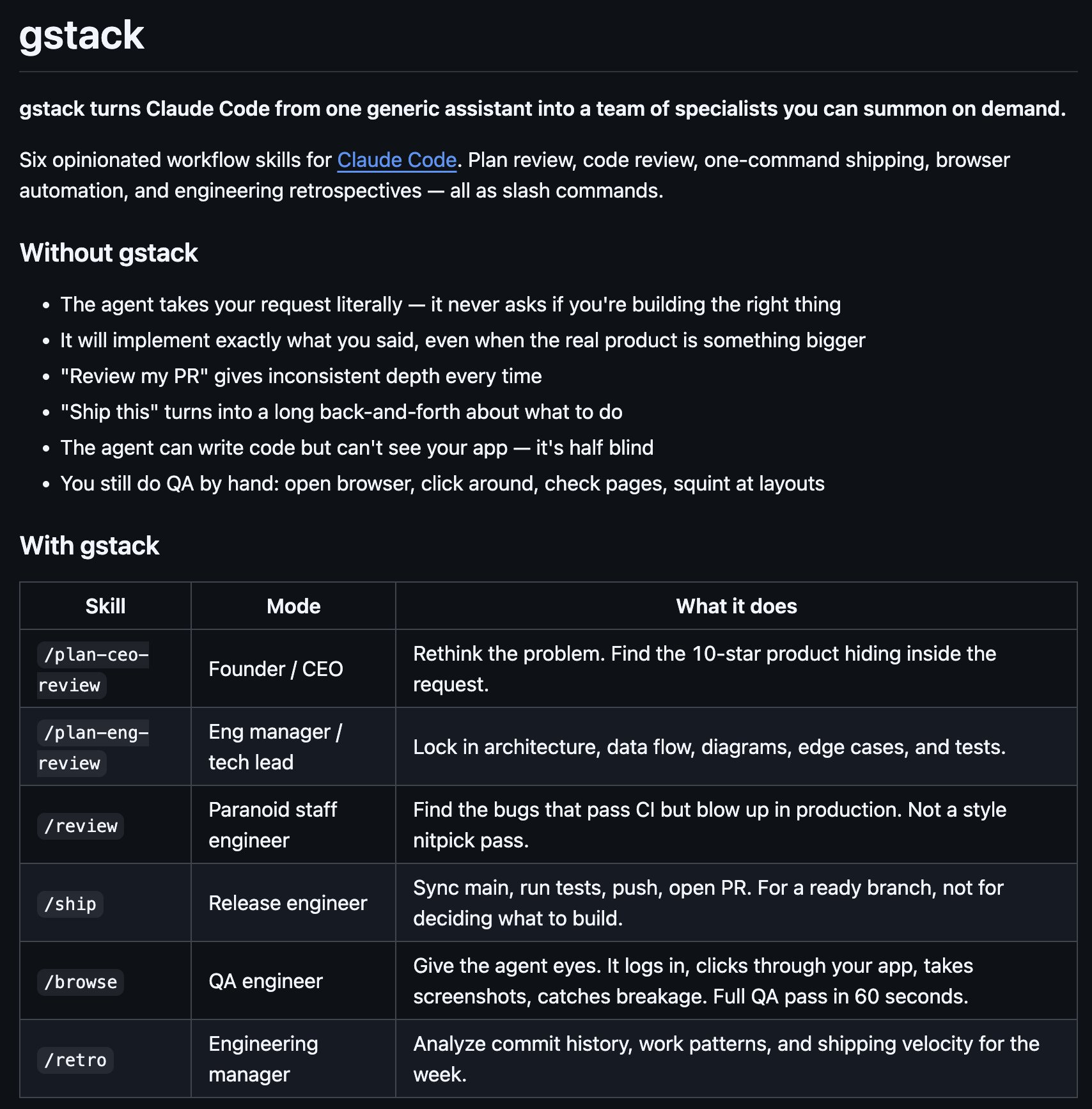
Garry Tan: I've been having such an amazing time with Claude Code I wanted you to be able to have my *exact* skill setup:
Introducing gstack, which you can install just by pasting a short piece of text into your Claude code
Here's a day in the life of how I use Claude code to crush almost 100 PR's in the last 7 days
I start with a plan, I use 2 different skills to hone it, CC can usually one-shot from there, and then here's a huge unlock I built today: /browse using Playwright via CLI not MCP
I am sort of still in awe how simple this is and how well it works.
Open source, MIT license, let me know if it works for you. It's just one paste to install it on your local Claude Code, and it's a 2nd one to install it in your repo for your teammates.
This one only applies to blocks of heavily visual work:
Paul Bakaus: One of the most insane 10x unlocks for Claude Code, like literally a "I can't believe I haven't tried this" moments:
Instruct it to live-prototype changes for you using the javascript_tool with its integrated chrome connection.
Complete game changer for visually challenging, iterative work.
People are getting quite a lot of coding done with remarkably little prompting.
Dean W. Ball: just hit a personal record for single coding agent session of a little under 10 hours. gpt 5.4 xhigh in the codex app, unsurprisingly.
no flashy app; just a really complicated economic research prompt. at this point most of my prompts do not stress these agents all that much.
to be clear this is 10 hours of continuous work. I have meaningfully exceeded 10 hours if we include periods when the agent was waiting for jobs to complete.
Unless That Claw
Calm down, sir. It is remarkable how excited people briefly got over the claw. The fundamental idea is sound, but the implementation was not, and the fundamental idea was not in any way news.
No, this was not a Linux moment. Quite the opposite. Linux was an existing great idea executed well in ways that planned for the future, giving us a foundation on which to build the future. OpenClaw was yolo.
Joel Grus: I saw the best minds of my generation destroyed by LLM psychosis
Shay Boloor: Jensen Huang says every company will need an OpenClaw agentic system strategy by calling it “the new computer.”
He claims OpenClaw became the most popular open-source project in $NVDA history within weeks and comparing its impact to Linux reshaping the software stack.
At some point we will see a good robust version of personalized general AI agents.
At some point, it will be essential software and you will be a fool not to use one.
This is not that point.
In the meantime, stick to the coding agents.
Ethan Mollick: After using it a bit, Claude Cowork Dispatch covers 90% of what I was trying to use OpenClaw for, but feels far less likely to upload my entire drive to a malware site.
The Lighter Side
Joke’s on them, CEO’s branch will be better in two weeks, tops.
adam: our CEO got really into "agentic coding" a few weeks ago so we quietly gave him a fork of the codebase and and he's been so excited to "push to prod" its adorable
New stuff is cool but claude.ai's uptime is down to 99.06% according to their own tracker, and it's trending down. The API is not much better. The various apps tend to be brittle, too; using Claude when the servers are marginally working for me has resulted in missing images, attachments, disappearing turns, weird behaviour on edits, retries that half-work but disappear on reply, disappearing chat history, missing styles, and various other jank. It has been less reliable in the past month or so than ever.
The "race first" mindset clearly extends to the apps as much as it does the models. There is a healthy balance somewhere, where they still push the frontier and have regular feature launches but with a scaling policy that can actually fail a model and apps that you can trust to do the thing. If they think they have the right balance already, then they are misaligned.
Help it's going too fast, I can't understand half of what's going on.
I got used to using Claude Code from the browser / on terminal / from the phone (pushing on github repos), but now I also need to get used to Cowork and other stuff I guess. But not before I finish the Open Socrates 2 review Electric Boogaloo.
Thank you for your service, Zvi, hope we somehow don't all die in a few years.



New stuff is cool but claude.ai's uptime is down to 99.06% according to their own tracker, and it's trending down. The API is not much better. The various apps tend to be brittle, too; using Claude when the servers are marginally working for me has resulted in missing images, attachments, disappearing turns, weird behaviour on edits, retries that half-work but disappear on reply, disappearing chat history, missing styles, and various other jank. It has been less reliable in the past month or so than ever.
The "race first" mindset clearly extends to the apps as much as it does the models. There is a healthy balance somewhere, where they still push the frontier and have regular feature launches but with a scaling policy that can actually fail a model and apps that you can trust to do the thing. If they think they have the right balance already, then they are misaligned.
Help it's going too fast, I can't understand half of what's going on.
I got used to using Claude Code from the browser / on terminal / from the phone (pushing on github repos), but now I also need to get used to Cowork and other stuff I guess. But not before I finish the Open Socrates 2 review Electric Boogaloo.
Thank you for your service, Zvi, hope we somehow don't all die in a few years.